
Blog
Can you paint exterior walls in autumn and winter?
What autumn weather means for exterior paint, what you can safely check yourself, and when the job is better left until spring.
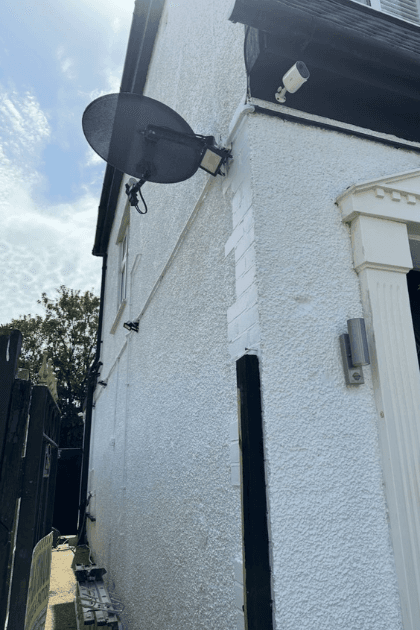
Yes, in many cases. Most masonry paint can still go on in autumn, and some of it in winter, as long as the wall is dry and the temperature stays above the minimum on the tin while the paint dries. What usually stops the job is not the date but short days, damp walls and cold nights.
This guide explains why the weather matters so much for exterior paint, what changes as the nights draw in, what you can safely check from the ground, and when it makes more sense to wait for spring. Anything that means long spells up a ladder, or scraping old paint on an older house, is a job for a professional, and we explain why below.
Why temperature and damp matter for exterior paint
Masonry paint is the tough paint made for brick, render and pebbledash. Most of it is water-based. It dries as the water evaporates and the binder, the glue that holds the colour together, forms a protective film. Cold slows that down, and below a certain point the film does not form properly, so the paint can turn powdery, crack or wash off in the first heavy rain.
Every tin gives its own limits. As an example, the datasheet for Dulux Trade Weathershield Smooth Masonry says not to apply it below 7°C, in rain or fog, or when the relative humidity (how much moisture is in the air) is above 80%. The wall matters as much as the air. A wall that gets no sun can stay colder and damper than the forecast suggests for most of the day.
What changes in October and November
The paint is the same as in summer. The conditions around it are not.
Shorter days. The paint needs to be on and dry to the touch before the temperature drops in the late afternoon. In practice that means starting once the morning dew has gone and finishing early.
Dew and condensation. Moisture settles on walls overnight and can take hours to dry off, especially on shaded walls. Paint put over a damp surface does not bond properly and is more likely to blister or peel.
Rain. Some modern masonry paints are shower resistant within 15 minutes of going on, but that only helps if the wall was dry to start with.
Frost. A hard frost the night after painting can spoil water-based paint before it has had time to cure, which means fully harden.
None of this rules autumn out. It just means fewer good days, and more care in picking them.
Paints made for colder weather
There are masonry paints made for autumn and winter work. They are usually solvent-based, meaning they are thinned with white spirit rather than water, so they do not rely on warm air to dry. Dulux Trade Weathershield All Seasons, for example, can be applied down to 0°C according to the manufacturer and is shower resistant within 15 minutes.
They are useful when a job cannot wait, but they have a stronger smell, need more care to apply and are not the right choice for every wall. It is worth getting advice on the existing coating before choosing one.
Safe checks you can make from the ground
You can learn a lot about your walls without leaving the ground. Binoculars help with the upper walls.
Look for flaking, bubbling or cracked paint, and rub your hand on a low part of the wall. A chalky white residue means the old paint has broken down.
Look for cracks in render and any patches that look bulged or loose. Render that has come away from the wall behind it is called hollow or blown render.
Check gutters and downpipes above any stained or green patches. A leak keeps the wall wet, and paint over a wet patch will not last.
Note which walls get sun in the afternoon and which stay damp most of the day.
When it is a job for a professional
Some parts of exterior painting are not safe or sensible to tackle yourself.
Working at height. The Health and Safety Executive advises that ladders are only for short, low-risk jobs. Painting a whole elevation means hours at height, so it needs proper access such as a tower or scaffold, set up by someone who knows how.
Old paint on older houses. Lead was taken out of most paints in the 1960s, and woodwork or metal painted before then can still contain it. Dry sanding or burning off old paint releases lead dust and fumes, which are harmful to breathe in or swallow. If your house is older and the old paint is flaking, have it tested before anyone starts scraping.
Cracked or hollow render. Paint will not hold failing render together. Water gets in behind the paint and the problem grows over winter. The render needs repairing first, and any new render must be fully dry before it is painted. Our rendering service covers these repairs.
How we decide whether to paint now or wait
When we visit, we look at what the walls are made of, what they are painted with, which way they face and the condition of any render. We then talk you through whether it makes sense to go ahead now or book the work for spring.
We schedule exterior work around dry weather. If the conditions are not right on the day, we would rather move the job than paint a wall that is not ready, because paint that fails in its first winter costs you twice.
Should you wait until spring?
If the walls need render repairs, or the job is a whole house with high elevations, a spring start often gives a better result with less risk of delay. Autumn is still a good time to have the walls looked at, so any repairs are planned and the painting can start as soon as the weather settles.
If you are tired of repainting rendered walls every few years, it may be worth asking about a coloured render instead. Our guide to silicone render explains how it works, where it suits and where it does not.
Whether your walls are ready now or better left until spring, Newlook Plastering can take a look and give you an honest view. Book a visit through our painting and decorating service and we will help you plan the right time for the job.
Not sure if your walls are ready to paint?
We will look at your walls, the render and the old paint, then tell you whether to go ahead now or plan the job for spring.
Other Articles


